
Let me start with the question nobody actually asks: what does a $9.90 serum tell you about a formula? Not as much as you think. Price is a proxy for a lot of things, but ingredient quality is not usually one of them in skincare. Hyaluronic acid is cheap to manufacture at scale. The cost difference between a $10 serum and a $45 one is usually packaging, marketing spend, and retail markup. That fact alone does not make The Ordinary Hyaluronic Acid 2% + B5 a good formula. It just means the price is not evidence against it.
I have been working through this formula deliberately, paying attention to the actual claims on the label and whether they hold up. This is not a feel-good writeup about a budget find. I want to explain what the formula contains, what 'multi-depth hydration' really means at an ingredient level, and where this serum falls short in ways the brand does not make obvious. If you came here because you're skeptical of a budget serum with 36,141 Amazon ratings, that skepticism is reasonable. Let me tell you what I actually found.
The Quick Verdict
A genuinely well-formulated hyaluronic acid serum that delivers on hydration when applied correctly, with one real limitation that matters depending on your climate.
Amazon Check Today's Price →The serum is budget-priced and has 36,000 reviews. Here's what that actually means.
The Ordinary Hyaluronic Acid 2% + B5 has a 4.7-star average across over 36,000 ratings. That's a large enough sample size to trust the pattern. It genuinely works for most skin types when applied to damp skin.
Amazon Check Today's Price on Amazon →What's Actually in the Bottle: The Formula Breakdown
The Ordinary labels this as 'Hyaluronic Acid 2% + B5.' The 2% refers to the combined concentration of three distinct hyaluronic acid forms: standard sodium hyaluronate, sodium hyaluronate crosspolymer (a larger-molecule crosslinked version that stays on the surface), and a low-molecular-weight hydrolyzed form that may penetrate more deeply into the upper layers of the skin. The B5 is panthenol, a provitamin that supports skin barrier repair and adds some additional moisture-retention on its own.
The ceramides addition you'll see mentioned on more recent versions of the formula is present in trace quantities. It is in the ingredient list, but it comes after the preservatives, which signals a very low concentration. I would not buy this formula specifically for the ceramides. If you need ceramides in meaningful amounts, CeraVe's formulas are built around them. What this serum does well is the hyaluronic acid trifecta: surface film, mid-layer holding, and the deeper hydrolyzed fraction working in the upper dermis.
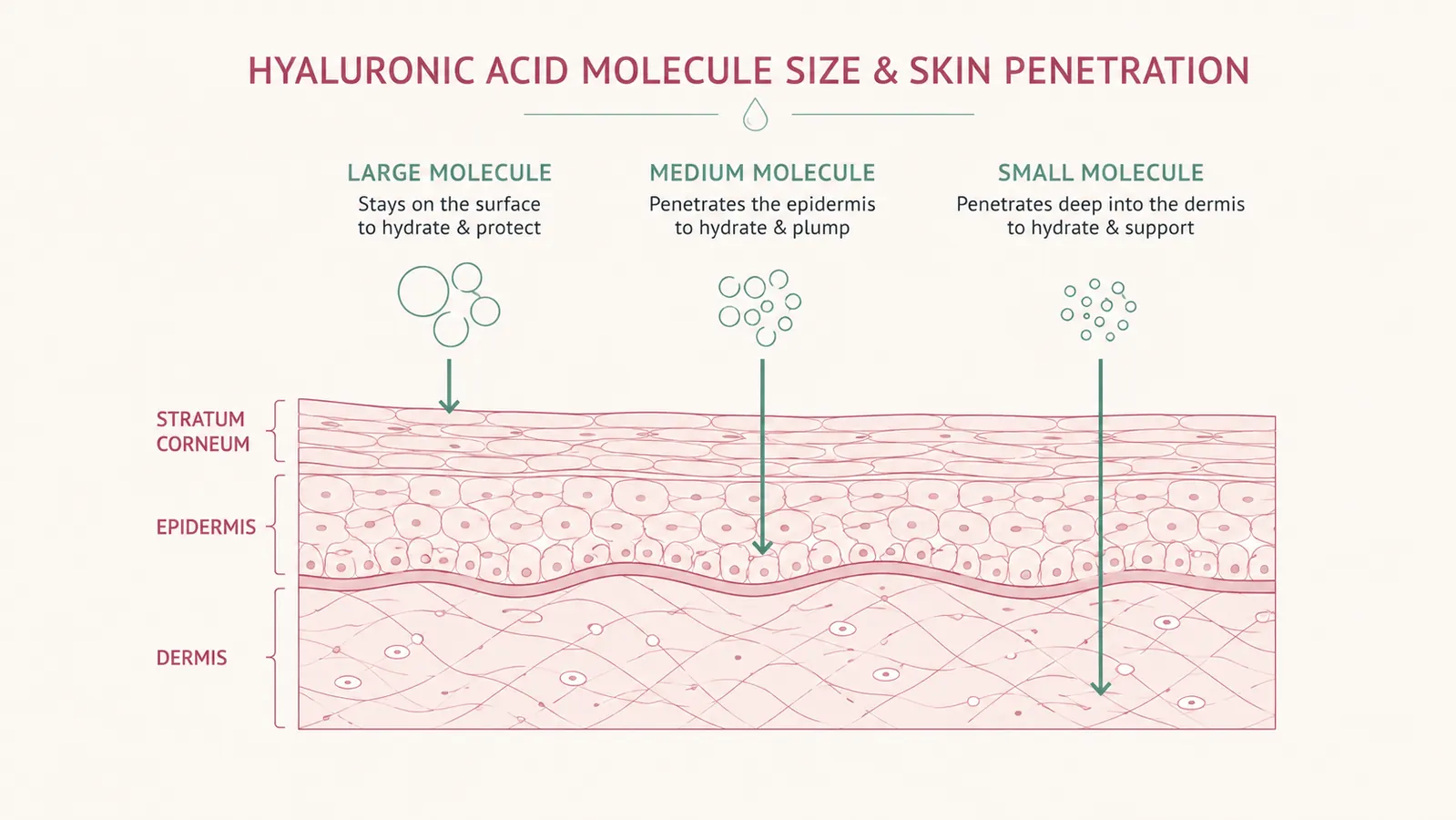
What 'multi-depth hydration' means in plain terms: hyaluronic acid molecules do not all behave the same way. Large molecules (high molecular weight) form a film on the surface of skin that reduces water loss. Medium molecules sit closer to the stratum corneum and hold water in the upper layers. Low-molecular-weight fragments may pass further into the skin, though the depth of penetration is still being studied and varies by formulation. The Ordinary's version uses all three weights, which is not exclusive to them but is not a given in every HA serum either.
The Thing Nobody Mentions: This Serum Can Pull Moisture Out Instead of Adding It
Here is the most important practical fact about this serum, and it is one that very few reviews lead with: hyaluronic acid is a humectant. That means it draws moisture toward itself. In a humid environment, it pulls that moisture from the air and holds it in your skin. In a dry environment, if you put HA on dry skin and do not follow immediately with an occlusive moisturizer, it can draw moisture from the deeper layers of your skin toward the surface and then let it evaporate off. Your skin can end up drier than when you started.
This is not a flaw specific to The Ordinary's formula. It is how humectants work. But it matters more with a thin, fast-absorbing serum like this one, which does not contain enough emollients or occlusives to seal in what it draws up. The fix is straightforward: apply to slightly damp skin (right after cleansing, before patting dry completely) and follow with a moisturizer within 30 to 60 seconds. In very dry climates or during winter months, you may also want to add a facial oil on top of your moisturizer to lock everything in. If you have been using this serum on dry skin without a follow-up moisturizer and wondering why your skin feels tight, that is likely what's happening.
In a dry climate, applying HA serum without sealing it in is a bit like opening a window in your skin. The formula is not doing anything wrong. You just need to close the window.
How the Formula Compares at the Ingredient Level
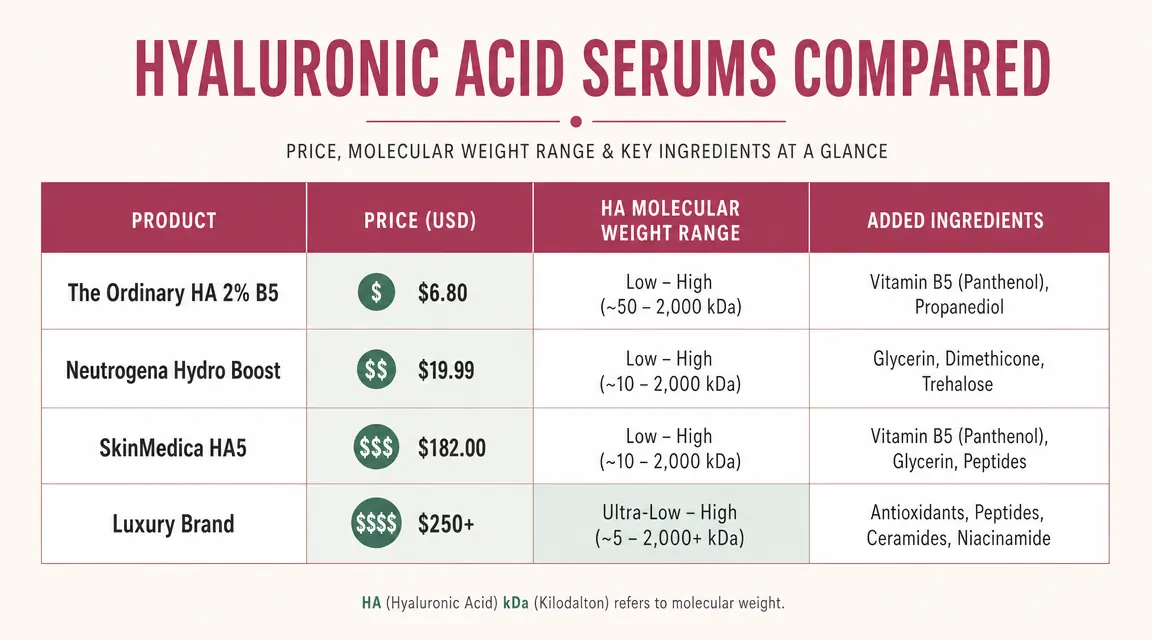
I want to put this in practical context against what else you could buy. A mid-range HA serum from a brand like SkinCeuticals or La Roche-Posay runs in the mid to upper range. Those serums often include additional support ingredients: niacinamide, glycerin at higher concentrations, peptides, or stabilized forms of vitamins. What you are paying for is the formulation ecosystem around the hyaluronic acid, not the HA itself. The Ordinary's serum is essentially HA and panthenol in a simple base. If those two things are what you need, you are not leaving anything behind by paying less.
Where premium serums have an edge is in packaging and oxidation stability. Hyaluronic acid is relatively stable and doesn't degrade as quickly as vitamin C or retinol, so the simple pump bottle The Ordinary uses is adequate. The formula does not need an airless container. Shelf life with reasonable storage (away from direct heat and sunlight) should be fine through the expiration date printed on the bottle.
What the 4.7-Star Rating Is Actually Measuring
With 36,141 ratings and a 4.7 average, this is one of the highest-rated skincare serums on Amazon. That number deserves a closer read. The most common review pattern I noticed: people who applied it correctly and followed with a moisturizer gave it five stars. People who used it without follow-up moisturization, or who applied it to fully dry skin in a cold environment, described it as doing nothing or making their skin feel worse. The formula is not at fault in those cases, but the brand does very little to explain application mechanics on the product itself. The instructions say 'apply to clean skin before moisturizer,' which is correct, but does not capture the damp-skin requirement.
A smaller subset of one-star reviews mention the formula going pill-y or balling up when layered under certain products. Hyaluronic acid crosspolymer, the surface-forming ingredient, can do this when it meets certain emulsifiers or silicones in a moisturizer. If you have experienced pilling with this serum, the fix is usually to wait 60 to 90 seconds for it to absorb before applying anything else, or to switch to a lighter-textured moisturizer without dimethicone or cyclomethicone as early ingredients.
Texture, Application, and What It Feels Like Over Time
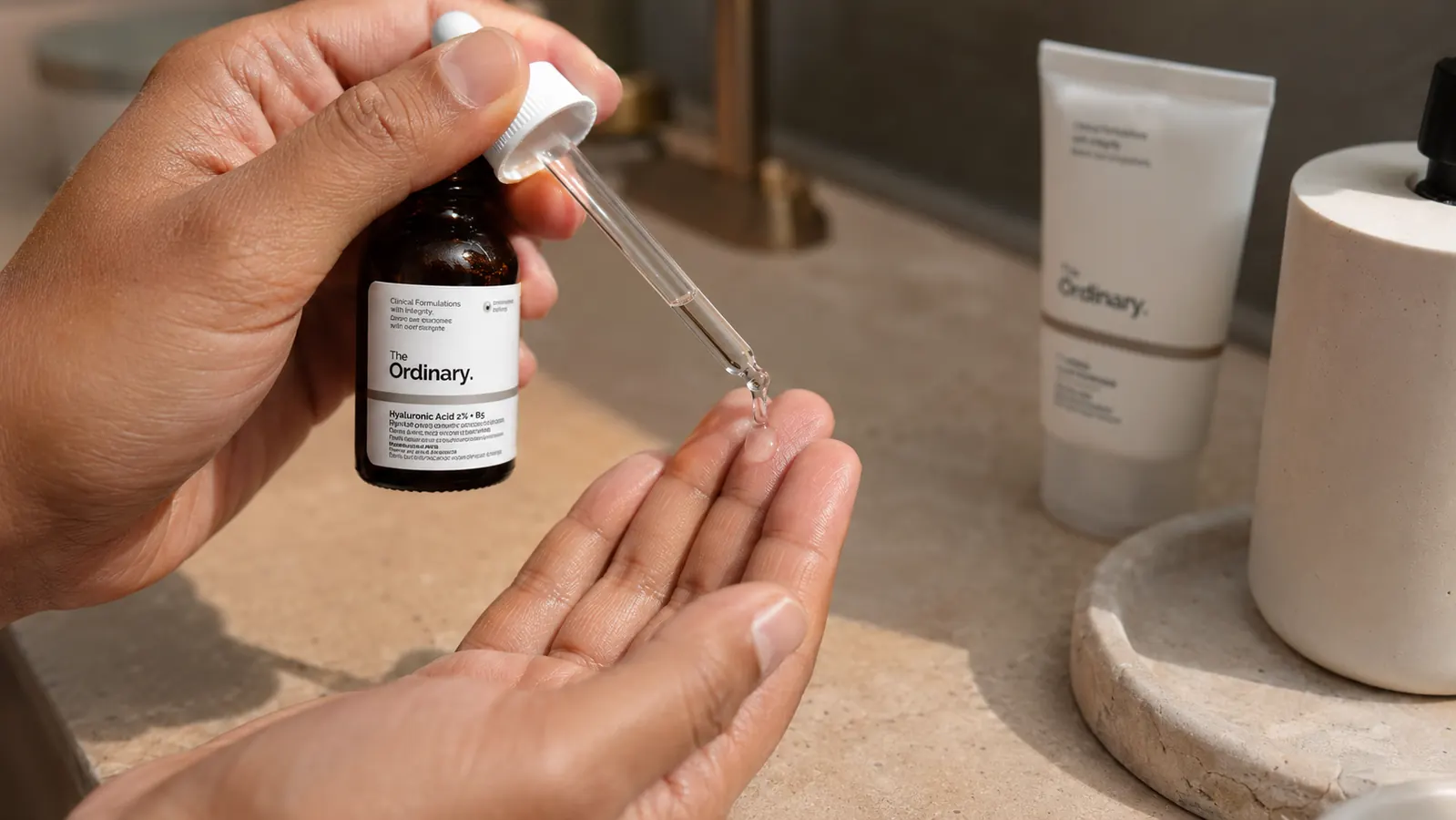
The serum is a clear, slightly viscous gel. It spreads easily across the whole face from three or four drops and absorbs relatively quickly. When applied to damp skin, the finish is smooth and slightly tacky for about 30 seconds before it settles. It doesn't leave any residue once sealed with a moisturizer. I have not experienced any fragrance or sensitivity reactions from the formula, which makes sense given the clean ingredient list. The main actives, the three HA forms and panthenol, are very well-tolerated across skin types including reactive and sensitive skin.
Over several weeks, the pattern I noticed was consistent: mornings after using this the night before, with a moisturizer layered on top, my skin had noticeably more suppleness at the surface. Not plumpness in the dramatic sense. More that the texture looked smoother and the fine lines around my eyes, which are where I see dehydration show up first, appeared shallower. This is what topical HA is supposed to do. I am not claiming it did anything to the deeper structure of my skin. Topical hyaluronic acid is working in the upper layers. It is not a wrinkle treatment or a collagen supplement. Expectations matter here.
The Cons Nobody Foregrounds
First, the dry-climate issue already covered: this serum requires a follow-up occlusive or emollient. That is not optional in low-humidity environments. Second, the texture can pill under makeup when layered over certain primers or foundations with silicone bases. If you are using this in a morning routine before makeup, either give it a longer absorption window or apply it only at night. Third, the packaging is functional but not beautiful. If you like having products on your bathroom counter that look elegant, the simple pipette bottle may not appeal to you. This is a purely aesthetic objection, but it's a real one for some people.
Fourth, and this matters for oily or combination skin types: HA serum on its own, without a moisturizer, can leave a slightly sticky film on oily skin types if not absorbed fully. The moisture-drawing effect may also amplify an oily surface sheen in humid climates. If your main skin concern is excess oil rather than dehydration, this serum is not the most targeted choice. A niacinamide serum addresses oil production more directly.
What I Liked
- Three molecular weights of HA provide genuine surface, mid-layer, and potential deeper hydration
- Panthenol adds barrier support beyond simple moisture retention
- 4.7 stars across 36,000+ ratings reflects real-world performance when used correctly
- Very simple ingredient list means low irritation risk, suitable for reactive skin
- At current pricing, it is one of the most cost-efficient HA formulas available
- Absorbs cleanly without greasiness when followed by a moisturizer
Where It Falls Short
- Can draw moisture out rather than in when applied to dry skin without an occlusive follow-up
- HA crosspolymer can pill under certain silicone-heavy products
- Ceramide addition is present but in trace amounts, not meaningful as a ceramide source
- No included emollient or humectant besides panthenol, making it highly dependent on your moisturizer
- Pipette dropper packaging is functional but has no frills
Who This Is For
The Ordinary Hyaluronic Acid 2% + B5 is a strong match for people who already have a good moisturizer they like and want to add a dedicated hydration step underneath it. If you have dry, dehydrated, or normal skin and you are using a moisturizer consistently, this serum slips into that routine without friction. It is also a good choice for people building a minimal, ingredient-focused routine without a lot of overlap. If you are already using a moisturizer that contains HA, adding this underneath mostly amplifies the effect rather than adding something new, which may or may not be worth it to you depending on how dry your skin runs.
Who Should Skip It
If you live in a very dry climate and run warm or forget to moisturize within a few minutes of applying a serum, this one will frustrate you. The humectant-without-occlusive problem is real and not always immediately obvious as the cause when skin feels tight. If you have oily skin and you are looking for a formula that addresses the oil alongside hydration, look at something like a niacinamide serum that handles both. And if you are layering under a silicone-heavy primer or foundation daily, test for pilling before committing to this in a morning routine. Night use sidesteps that problem entirely.

One more practical note: if you buy this and find the pipette delivers more serum than you need per use, you can press the pipette against the bottle opening and release slowly. Three to four drops covers the full face. Using more than that does not provide meaningfully more hydration and burns through the bottle faster than needed. It is a small bottle, about 30 milliliters, and should last about 45 to 60 days at once-daily use.
At current pricing, this is one of the most cost-efficient HA formulas on the market, if you use it correctly.
The Ordinary Hyaluronic Acid 2% + B5 works exactly as described when applied to damp skin and sealed with a moisturizer. Check today's price on Amazon. It tends to stay consistent, but the small bottle sells out during restocks.
Amazon Check Today's Price on Amazon →