
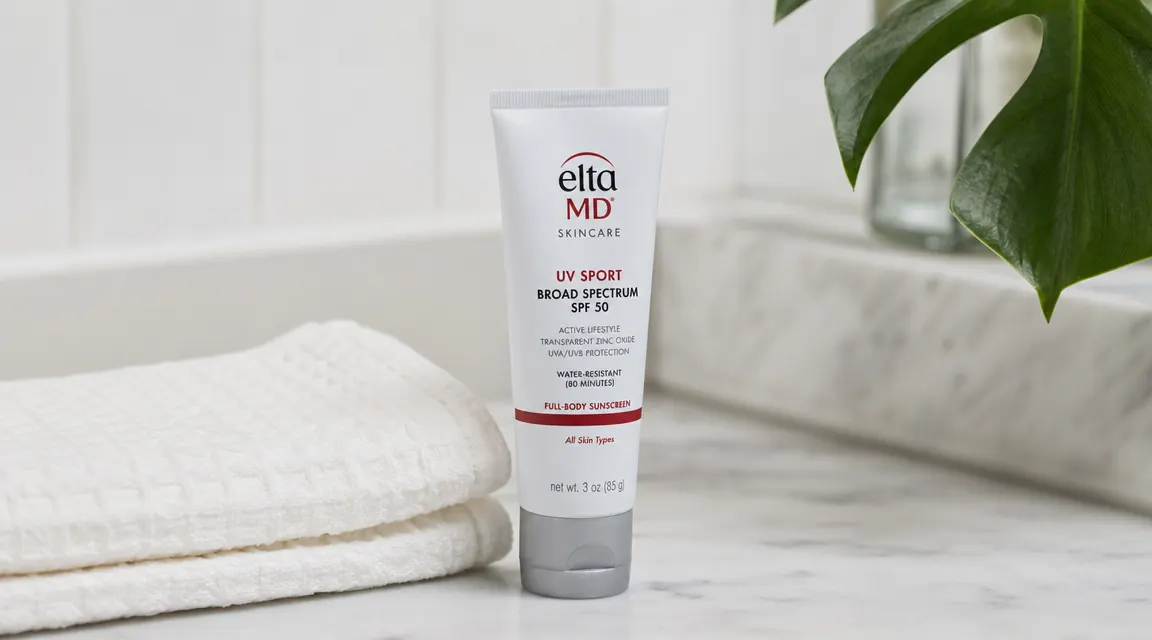
When I tell people that dermatologists tend to reach for EltaMD before almost any other sunscreen brand, the follow-up question is always the same: is that a real endorsement or just a sponsorship deal? I spent weeks reading through the ingredient list on the UV AOX Elements formula, cross-referencing those ingredients against published research, and using the product daily on my combination-sensitive skin to form an opinion that is not based on the label copy. Here is what I found.
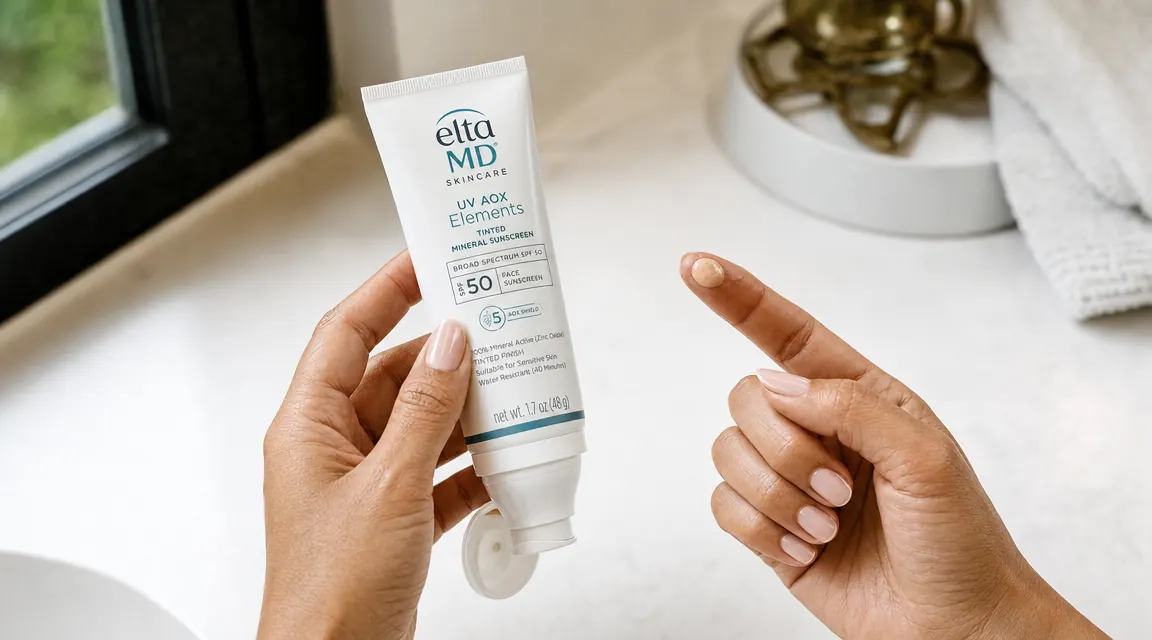
EltaMD UV AOX Elements Tinted Face Sunscreen carries an SPF 50 rating, uses 100 percent mineral filters (zinc oxide and titanium dioxide combined), and includes what the brand calls the AOX antioxidant complex. The tint is universal, designed to blend into most skin tones by sheering out to a light, skin-flattering coverage. On Amazon, where it has nearly 15,000 ratings with a 4.6 average, the most common complaints are cost and a particular warmth to the tint that does not work for every skin tone. I want to address both of those things honestly.
The Quick Verdict
A genuinely well-formulated mineral sunscreen that earns dermatologist trust for real ingredient reasons, not just brand reputation. The AOX complex is a legitimate addition, the tint works for light-to-medium skin tones, and the price reflects real R&D. Deeper skin tones should test it first.
Amazon Check Today's Price →Your current sunscreen might be doing less than you think. Check what EltaMD adds.
EltaMD UV AOX Elements combines SPF 50 mineral filters with a patented antioxidant complex designed to address the UV damage that sunscreen alone does not catch. Current pricing on Amazon shifts, so check today before it moves.
Amazon Check Today's Price on Amazon →What AOX Actually Means in a Sunscreen Context
SPF ratings measure protection from UVB rays, the ones responsible for sunburn and a significant portion of skin cancer risk. Broad-spectrum labeling adds UVA protection. But UV radiation generates something SPF numbers do not address directly: free radicals. These are unstable molecules produced when UV light hits skin, and they continue causing oxidative cellular damage after the UV exposure is over. This is partly why skin can look dull and show signs of breakdown even in people who wear sunscreen consistently.
EltaMD's AOX complex adds vitamin C (as L-ascorbic acid and ascorbyl glucoside), vitamin E (as tocopheryl acetate), and ferulic acid. That combination is not accidental. L-ascorbic acid is the most bioavailable form of vitamin C, and the research on its antioxidant activity in skin is substantial. The problem is stability: pure L-ascorbic acid degrades when exposed to air and light, which is why most vitamin C serums come in dark or airtight packaging. EltaMD addresses this partly through the ascorbyl glucoside, a more stable derivative that converts to active vitamin C in skin. Together they give broader coverage than either alone. Ferulic acid extends the stability of both vitamin C and vitamin E, a synergy documented in peer-reviewed literature. So the AOX complex is not a marketing name for a random antioxidant sprinkle. The formulation choices reflect an understanding of how these ingredients actually behave.
That said, this is a sunscreen applied topically and washed off within a day. It is not a vitamin C serum sitting on your skin overnight at a high concentration. The antioxidant dose in UV AOX is meaningful as a complement to SPF protection, not as a replacement for a dedicated antioxidant serum if you are targeting dark spots or post-acne marks.
The Mineral Filter Combination and Why It Matters for Sensitive Skin
UV AOX uses both zinc oxide and titanium dioxide. Zinc oxide alone, at the concentrations needed for meaningful broad-spectrum protection, can feel heavy and leave a more noticeable white cast. Titanium dioxide covers UVB well but has a shorter effective range for UVA protection. Using both lets the formula achieve SPF 50 and PA+++ broad-spectrum coverage while keeping each individual mineral filter at a lower concentration, which improves both the feel on skin and the opacity of the formula. The tint then helps neutralize whatever residual cast remains.
For people with reactive skin, rosacea, or compromised skin barrier, this combination matters for a different reason: neither zinc oxide nor titanium dioxide penetrates the skin. They sit on the surface and physically scatter UV. Chemical filters like avobenzone and oxybenzone are absorbed into the skin to perform their function, which is not inherently dangerous but is a legitimate concern for people with sensitized or allergy-prone skin. If you have been using a chemical sunscreen and your skin does not behave, switching to a well-formulated mineral like UV AOX is a reasonable first move before blaming your moisturizer or cleanser.
The AOX antioxidant complex is not a marketing sprinkle. Vitamin C, vitamin E, and ferulic acid are selected because they work synergistically, and that synergy is documented. The formulation reflects something.
The Tint: Who It Works For and Who It Does Not
This is the part most reviews dance around. The tint in UV AOX Elements is described as universal, and it does blend to a translucent finish on most skin tones rather than sitting as a solid layer of color. On light to medium skin tones, it does a good job of neutralizing the mineral cast and giving skin a slightly more even, skin-like finish. It is not a foundation substitute, but it serves the function of not looking white or chalky. On medium-deep to deep skin tones, the tint can read as slightly ashy or pink rather than truly neutral, which is a common limitation of so-called universal tints in the mineral sunscreen category.
If you have a deeper skin tone, I would strongly recommend trying a sample or small size before committing to the full tube. This is not a reason to skip EltaMD as a brand entirely. Their UV Clear formula, for example, is untinted and may be a more versatile option if the tint is a concern. But if UV AOX is your target specifically for the AOX complex and tinted finish, test it on your skin in natural light before deciding.
One thing worth noting: several reviewers mention that the tint oxidizes slightly within the first hour of wear, reading warmer and more natural than it does straight out of the tube. If it looks slightly off when you first apply it, give it a few minutes before drawing conclusions.
Texture, Application, and How It Behaves Under Makeup
UV AOX has a lightweight, fluid-cream texture. It applies easily with fingertips and does not require heavy blending to avoid patchiness. The finish is a soft matte-to-natural satin depending on skin type: people with drier skin will likely find it comfortable without any additional moisturizer underneath, while oilier skin types may notice slight shine at the T-zone by midday. It is not a true matte sunscreen and is not designed to function as one.
Under makeup, it performs well. Because it has a tint, it actually does some of the color-evening work that a primer or light foundation would do, which means some users can skip or lighten their base. It does not cause pilling under powder products in my testing, which is a common issue with heavier mineral sunscreens. If you experience pilling, the fix is almost always waiting a full two minutes after applying the sunscreen before patting on any powder over it. Rushing that step is the main culprit.
The Dermatologist Endorsement Question
EltaMD is sold through dermatology offices and medical spas in addition to Amazon, which is part of why it carries clinical credibility. But the more substantive reason dermatologists tend to reach for it is the formulation philosophy. The active ingredients are well-chosen for the function they need to perform. The inactive ingredients do not include fragrance, parabens, or known sensitizers. The niacinamide in the formula adds a mild barrier-support function. The overall formula is appropriate for post-procedure skin, which is the most reactive skin state a dermatologist encounters.
That endorsement is not the same as saying no other sunscreen will do the job. There are good mineral sunscreens at lower price points, including options from EltaMD's own lineup. What UV AOX specifically adds is the antioxidant complex on top of the mineral SPF foundation, which is not standard even among premium mineral sunscreens. If you are already using a vitamin C serum in the morning and applying it before sunscreen, you may already be addressing the free radical concern through that layer. The UV AOX is most compelling if you want to simplify your routine by consolidating the antioxidant step into your SPF.
What I Liked
- AOX antioxidant complex uses a documented vitamin C plus vitamin E plus ferulic acid synergy, not a random sprinkle of ingredients
- Pure mineral filters (zinc oxide plus titanium dioxide) suitable for reactive, post-procedure, and sensitive skin
- Tint effectively neutralizes white cast for light to medium skin tones
- No fragrance, no parabens, no chemical UV filters for those who need to avoid them
- Lightweight enough to wear comfortably under makeup without pilling
- Niacinamide and hyaluronic acid support barrier hydration within the formula
Where It Falls Short
- Price point is high for a daily sunscreen, especially if you go through it quickly at a generous application amount
- Tint skews warm and may not be truly universal on medium-deep to deep skin tones
- Antioxidant dose is a complement to SPF, not a substitute for a dedicated vitamin C serum
- Finish is natural-matte, not truly matte, so oily skin types may still need blotting by midday

Is the Price Actually Justified?
UV AOX Elements lands at a price point that will give pause to anyone used to drugstore sunscreen. Let me put the cost in context. You are paying for pharmaceutical-grade mineral filters, a patented antioxidant complex with real research behind the ingredient combination, and a tinted formula designed to work as a last step for a minimal skincare routine. If you are currently buying a separate vitamin C serum, a primer, and a basic mineral sunscreen, consolidating those into one product may actually represent a cost savings per morning step rather than an expense.
That framing only holds if the product actually works on your skin. If the tint is off for your skin tone, or if you have a heavy-coverage preference that UV AOX cannot satisfy, you are paying for something that is not solving your specific problem. The justification for the price is built on whether the formula fits your actual routine. If you use a vitamin C serum at night, wear light makeup or nothing, and want a mineral SPF that does not fight your skin, UV AOX is priced proportionally to its function. If you want a budget daily SPF for outdoor days where you are reapplying every two hours and do not care about tint or antioxidants, you do not need this product and there is no reason to pay for it.
Who This Is For
UV AOX Elements works well for people who have reactive, sensitive, or post-procedure skin and need a mineral-only sunscreen without chemical filters. It is a good fit for light to medium skin tones who want a tinted formula that eliminates white cast without requiring a separate primer or foundation base. It is also genuinely useful for people who want to consolidate antioxidant protection into their SPF step rather than layering a vitamin C serum underneath every morning. For that use case, the formulation logic holds and the price becomes easier to justify.
Who Should Skip It
If you have a medium-deep to deep skin tone, the universal tint may not perform as advertised for you. Test before committing. If you are already using a vitamin C serum in the morning and only need SPF on top of that, you can find well-formulated mineral broad-spectrum options at a lower price point. If you need a true matte finish for very oily skin, UV AOX will not give you that. And if budget is the primary concern, EltaMD's own UV Clear (untinted, no AOX complex) and several other mineral sunscreens handle the core SPF job at a meaningfully lower cost.
If the formula logic makes sense for your routine, here is where to check current pricing.
EltaMD UV AOX Elements is available on Amazon and pricing moves. If you are considering adding it to your morning routine, checking today's price takes 30 seconds and gives you the full ingredient list and current reviews in one place.
Amazon Check Today's Price on Amazon →