
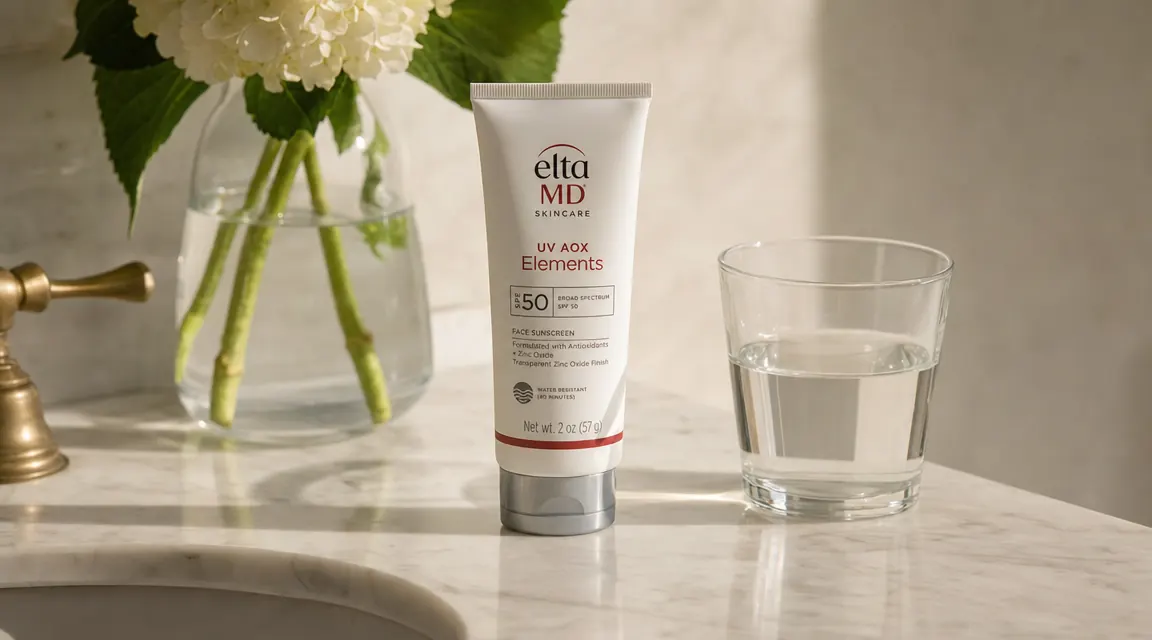
I wore the EltaMD UV AOX Elements Tinted Sunscreen every single morning for four weeks. My skin type is oily through the T-zone with drier patches along the jaw, and I have historically avoided mineral sunscreens because they left me looking like I had dusted flour on my face. EltaMD kept showing up on lists put together by dermatologists I respect, and the AOX antioxidant formula was a different claim from the typical SPF 50 bottle pitch, so I decided to pay the price and run my own test.
The short answer is that this sunscreen is close to what I had been hoping to find for years. It is not perfect, and at the current price it is a real commitment. But the four-week daily wear showed me things a single morning test never could, including how the tint wears into the afternoon, how the mineral filters behave when I am sweating through a commute, and whether the antioxidant claims hold up in practice.
The Quick Verdict
A mineral sunscreen that genuinely wears flat on oily skin, skips the white cast, and layers under makeup without pilling. The antioxidant blend is a real bonus, not a marketing footnote. The price keeps it from being a daily no-brainer for everyone.
Amazon Check Today's Price →Still wearing last year's sunscreen because nothing ever feels right? EltaMD UV AOX is the one that changed my morning routine.
EltaMD UV AOX Elements Tinted SPF 50 is a 100% mineral formula with an antioxidant blend that layers clean under makeup and does not leave a white cast on medium to deeper skin tones.
Amazon Check Today's Price on Amazon →How I've Used It
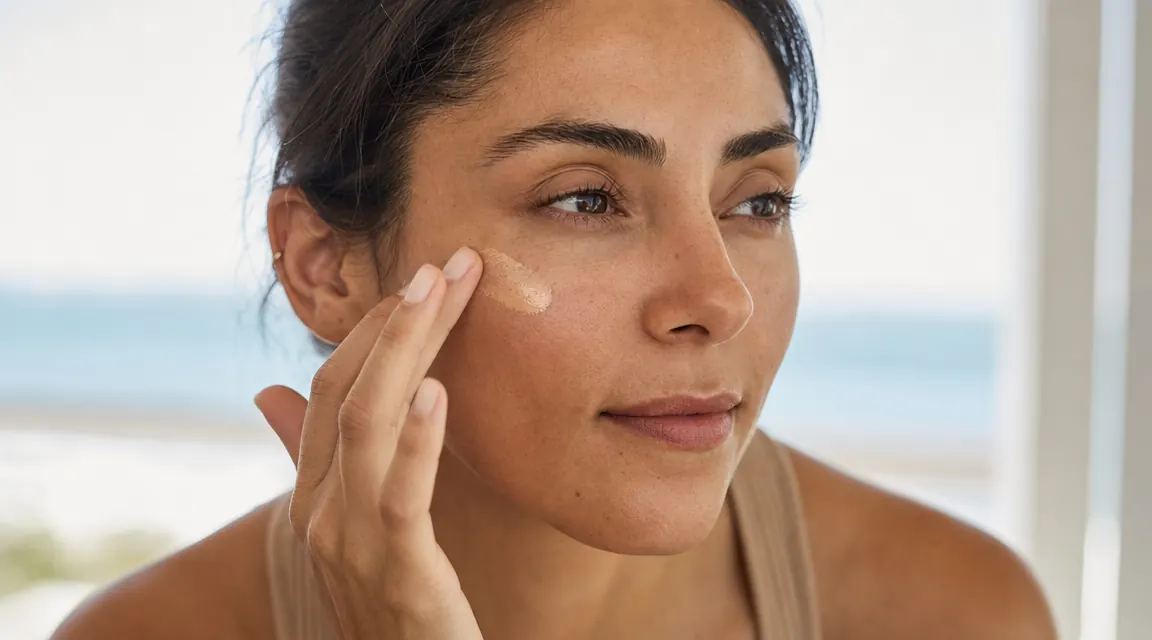
Every morning for four weeks I applied EltaMD UV AOX Elements as the last step in my AM skincare routine, directly over my moisturizer. I used the recommended one full pump, spread across my forehead, cheeks, nose, and chin, then blended toward the hairline and jawline. On days when I applied makeup, I waited three minutes and then went in with a tinted moisturizer or a light powder. On bare-skin days, which was most of the time, I wore the UV AOX alone and observed how it held through a full workday.
I tracked three specific things each day: how the finish looked immediately after application, how the skin looked at noon without reapplication, and whether I noticed any pilling or color transfer on a white pillowcase at the end of evenings when I was lazy about washing my face before bed. That last one was unscientific, but informative.
I also did a side-by-side spot test during week two, applying the EltaMD formula to my left forearm and a drugstore chemical SPF 50 I had been using to my right forearm, then photographing both in direct noon sun. I was looking for any visible difference in how each sat on skin after two hours outdoors.
What the AOX Formula Actually Is
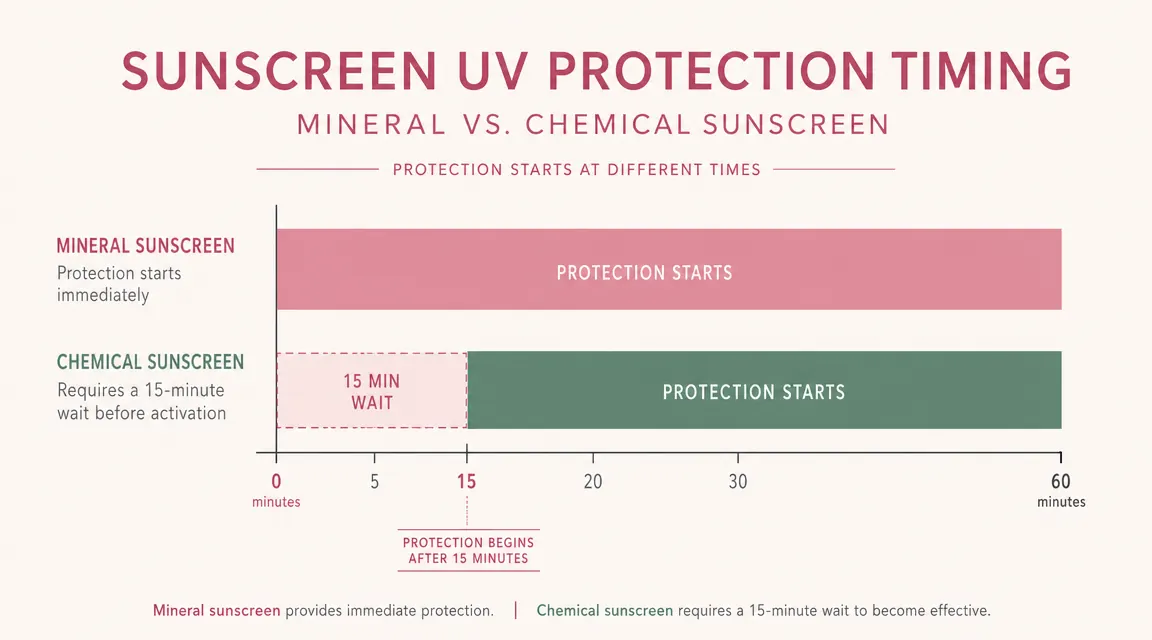
The active UV filters in EltaMD UV AOX Elements are zinc oxide and titanium dioxide, both at concentrations that deliver SPF 50. These are physical blockers, meaning they sit on top of skin and reflect UV rays rather than absorbing and converting them like chemical filters do. Physical blockers provide protection the moment you apply them, with no waiting period. That sounds minor, but if you are like me and sometimes put on sunscreen and walk straight out the door, the timing actually matters.
The AOX part of the name refers to an antioxidant blend that EltaMD includes in the formula alongside the UV filters. This blend includes vitamin C in a stabilized form, vitamin E, and ferulic acid. This specific combination is well-established in the research literature on topical antioxidants. Vitamin C and vitamin E together have been shown to offer greater photo-protective benefit than either alone, and ferulic acid stabilizes both and may extend their effectiveness. The inclusion here is not just a marketing add-on. It is a meaningful formulation choice that turns the product into more than a simple SPF step.
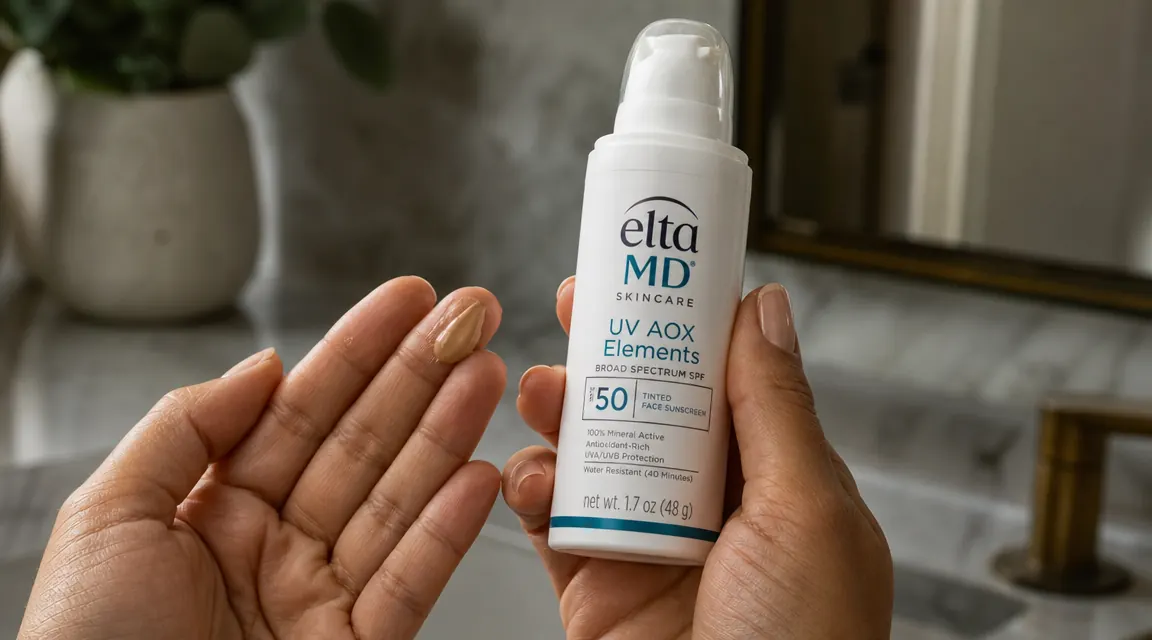
The tint itself is a single iron oxide shade designed to neutralize the white cast that mineral zinc oxide typically leaves on skin. It works best on light to medium skin tones. On me, which is roughly NC25 in the old Sephora shade system, it blended out to near-invisible within thirty seconds of application. I checked with a friend who is closer to NC40, and she found the tint a bit light. EltaMD does not offer multiple shades of this formula, which is a real limitation if you are deeper than medium.
Weeks One and Two: The Texture and Finish Test
The first morning I used UV AOX Elements I was prepared for the slight drag that zinc oxide formulas often have. There was almost none. The texture is a smooth, slightly dewy emulsion, and it spread across my face without tugging. A pump and a half covered my neck as well, which I always include because I have some sun damage there from years of applying face sunscreen and stopping at the jawline.
By the end of week one I noticed that the finish on my T-zone at noon was not the shine I expected. It was more of a low-key glow, the kind that reads as healthy rather than oily. I was not blotting more than usual. My cheeks, which tend to be slightly dry, looked normal throughout the day without any tight feeling. This is the part that impressed me most about the formula at this stage: it performed differently on different zones of my face, and both zones seemed to benefit.
By the end of week two, I trusted the product enough to stop checking my phone camera in bathrooms at noon. That is my personal benchmark for a sunscreen earning daily-driver status.
By the end of week two I stopped checking my reflection at noon. That is my personal benchmark for a sunscreen earning daily-driver status.
Weeks Three and Four: Long-Term Skin Observations
This is where I pay attention to things that short-term testers miss. Around day eighteen I noticed that the low-grade redness I usually have across my nose bridge was slightly less visible than normal. I did not change anything else in my routine during this period. I want to be careful not to overstate this because a sample size of one is not a clinical trial, but the antioxidant-plus-mineral combination may have contributed to less UV-triggered inflammation than the chemical SPF I was using before.
In week four I also had three consecutive days of extended outdoor time, around four to five hours each, because I was helping a friend move. I reapplied the EltaMD UV AOX once at midday using the spray reapplication method, which involves pressing a blotting paper against the skin first and then spraying over it. My face did not burn. My nose, which is my first indicator of inadequate sun protection, stayed calm. The formula held through sweating in a way that impressed me.
The one place I ran into trouble during the full four weeks was under my chin and close to my ears. On days when I wore a heavy-coverage foundation on top of the EltaMD, I got slight pilling at those edges. This seems to be a layering issue rather than a flaw in the sunscreen itself. When I switched to a lighter makeup product, the pilling disappeared entirely.
Under Makeup: Layering Notes
EltaMD markets UV AOX Elements as suitable for use under makeup, and that claim holds most of the time. The key variable is what you apply on top. Over a powder-based foundation or a light tinted moisturizer, it was a clean base. Over a thick silicone-forward foundation, I experienced mild pilling at the hairline. The formula does not contain heavy silicones itself, but it reacts to them in heavy-coverage products.
On days when I used it as a standalone skin-evening step with no makeup at all, it performed best. The tint is sheer enough to let your actual skin tone come through rather than sitting on top like a tinted moisturizer. That sheer quality is a feature for most of my use cases, but it means UV AOX is not a substitute for coverage products if coverage is what you need.
What I Liked
- No white cast on light to medium skin tones; the iron oxide tint neutralizes zinc oxide's graying effect cleanly
- The antioxidant blend (vitamin C, vitamin E, ferulic acid) adds genuine photo-protective value beyond the SPF number
- Texture is smooth and emulsion-like, not thick or chalky; spreads in 20 to 30 seconds
- Holds through sweating and moderate outdoor activity without reapplying every 90 minutes
- Works well as a standalone skin-evening step; the tint reads natural on medium skin tones
- No fragrance, no parabens, and no chemical UV filters, which matters for sensitive and reactive skin
Where It Falls Short
- At a premium price per bottle, it is a significant price point for a product you use every single morning
- One universal tint shade limits usefulness on deeper skin tones; NC40 and above will see the tint read light
- Pilling can occur under heavy silicone-based foundations; requires mindful layering
- The tube dispenses via pump; getting the last 15% of product out requires effort
- Not water-resistant, so ocean swimming or heavy sports will require more frequent reapplication
How It Compares to Chemical SPF Options
The drugstore chemical SPF 50 I was using before this test was invisible and fast-absorbing. Those are real advantages. Chemical sunscreens typically feel lighter because they use filters like avobenzone and homosalate that dissolve into the skin rather than sitting on top of it. The tradeoff is the activation window, usually fifteen to twenty minutes before you are protected, and the fact that some chemical filters are associated with skin irritation in sensitive individuals.
After four weeks with EltaMD UV AOX Elements, I found the mineral experience to be more comfortable day to day, particularly around the eyes, where chemical filters have always made me feel a subtle stinging sensation. The mineral formula had none of that. The slight texture difference between mineral and chemical is real, but it was much smaller than I expected from a zinc oxide product.
Who This Is For
EltaMD UV AOX Elements is the right sunscreen for someone who has tried chemical SPF options and found they cause irritation, redness, or stinging around the eyes. It also makes strong sense for anyone who wants their sunscreen step to do additional work, specifically the antioxidant combination that may support against pollution and free-radical damage beyond UV. If you are light to medium in skin tone and you want a product that dermatologists actually recommend to their own patients, this one consistently appears on those lists for real reasons.
It is also a good match for anyone who wants to simplify their morning routine. I used it as cleanser, moisturizer, antioxidant serum, and sunscreen, four steps replaced by two when I used this as the final step after a lightweight moisturizer. That kind of routine compression is worth something, especially on mornings when you have twelve minutes to get out the door.
Who Should Skip It
If your skin tone is deeper than medium, the single universal tint is not going to work well for you. It will read ashy or gray, which defeats the purpose of the tinted formula entirely. EltaMD makes other formulas in the UV line that are untinted, and those may work better if you prefer to address tone correction with your makeup.
If you are on a tight budget and you need a daily sunscreen that protects reliably without the extras, a well-formulated drugstore mineral option will do the core job for a fraction of the price. The antioxidant blend and the premium skin feel in EltaMD UV AOX are real, but they are extras. The SPF itself is not more protective than a basic SPF 50, whether it costs less or more.
And if you build your look around a high-coverage silicone foundation, plan to do some layering tests before committing. Pilling under that type of formula is a genuine issue that may require adjusting your application routine.
Four weeks of daily testing convinced me this is the sunscreen I keep stocking. Here is where to find it.
EltaMD UV AOX Elements Tinted SPF 50 is available on Amazon. A 1.6 oz tube lasts me about six weeks with daily use. The current price fluctuates slightly, so it is worth checking now.
Amazon Check Today's Price on Amazon →