

I spent two years trying to fade a cluster of dark spots on my left cheek, the kind you get after a breakout heals and leaves a shadow behind. I used brightening moisturizers, tried a vitamin C toner, and even bought a pricey boutique serum that smelled like fresh citrus and did almost nothing. What eventually worked was simpler than all of that: a consistent morning routine with a well-formulated vitamin C serum, applied correctly and backed up with sunscreen every single day. The process took about ten weeks to see real results, but it was steady and it held.
Dark spots are stubborn because they are caused by excess melanin in the skin, which forms when cells are triggered by UV exposure, inflammation, or hormonal shifts. Vitamin C, specifically L-ascorbic acid, works by interrupting the enzyme (tyrosinase) that drives melanin production. It does not strip color from skin that is already pigmented overnight. It slows new melanin formation and helps existing spots fade gradually as skin cells turn over. That is why the routine matters as much as the ingredient itself. If you apply vitamin C inconsistently, skip sunscreen, or use the wrong concentration for your skin, you will wait a long time for results that may never arrive.
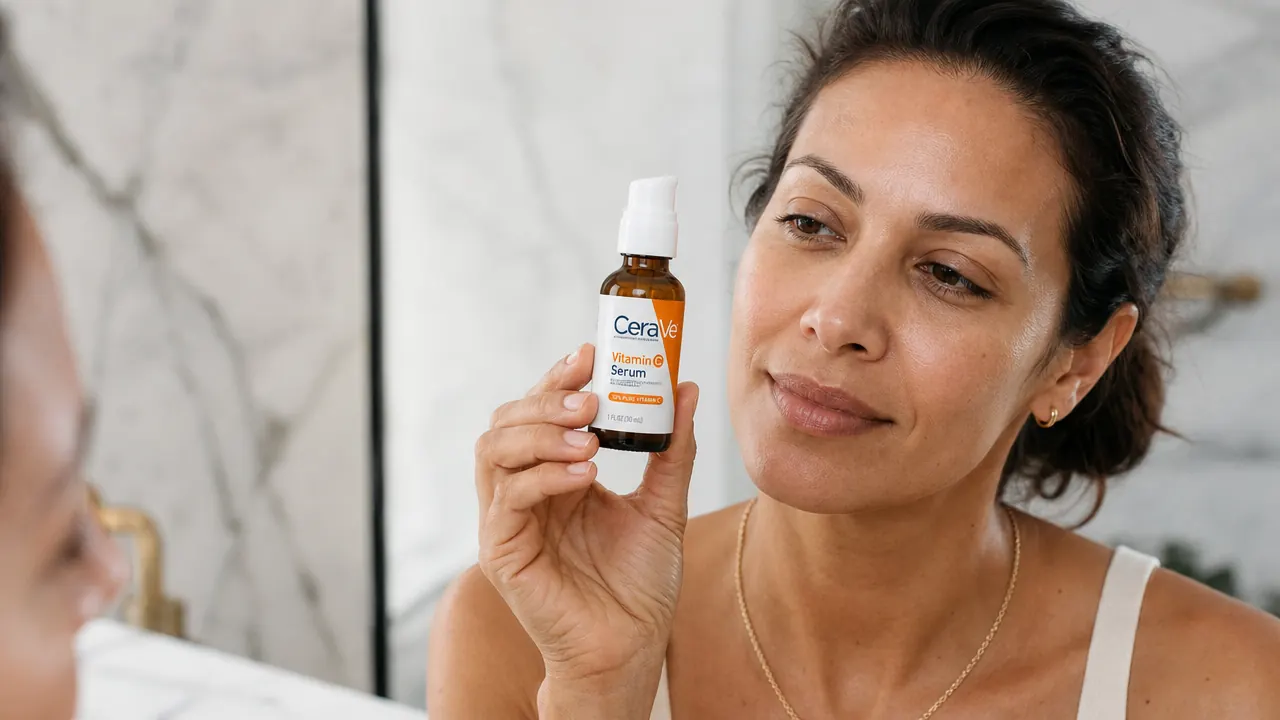
If you want a serum that works through this routine without irritating sensitive skin, CeraVe's 10% vitamin C formula adds ceramides and hyaluronic acid to the mix.
It is one of the few vitamin C serums that brightens without stripping the skin barrier, which matters a lot if you are using it daily for months at a stretch.
Amazon Check Today's Price on Amazon →Step 1: Cleanse Your Skin Thoroughly Before Applying
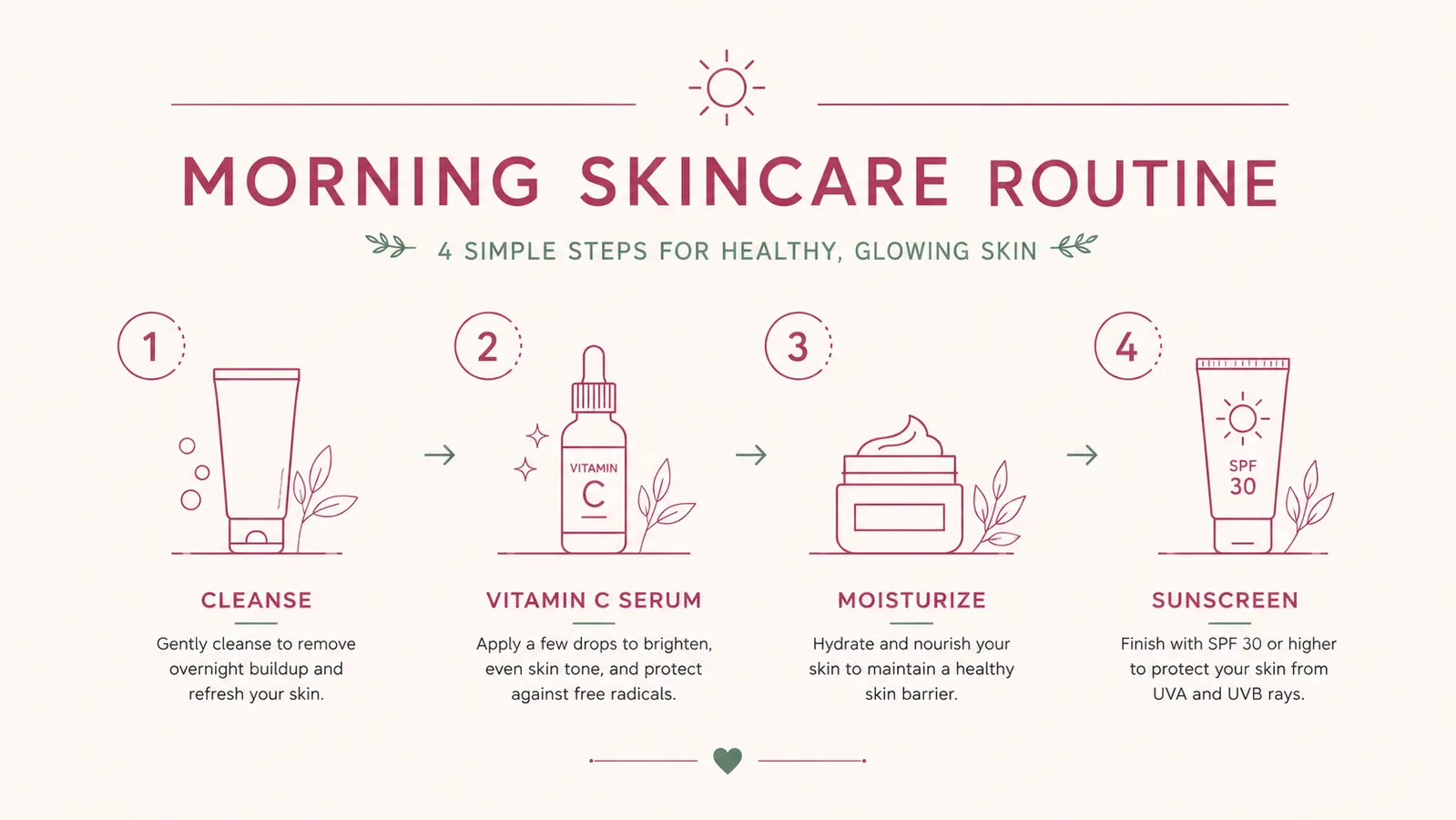
Vitamin C serums absorb best on clean skin. That sounds obvious, but the type of cleanser you use before applying your serum matters more than most people think. You want to remove the skin's overnight sebum and any residue from nighttime products without stripping the moisture barrier. A gentle, non-stripping cleanser is the right move here. Anything that leaves your skin feeling tight and squeaky after rinsing is too harsh for a morning vitamin C routine.
After cleansing, pat your face dry with a clean towel. Do not rub. Leave the skin slightly damp if you can. Vitamin C absorbs well into skin that still has a bit of moisture on the surface, and the residual hydration helps minimize any mild tingling from the acid.
One mistake I made early on was using a strong exfoliating cleanser before my serum, thinking the extra cell turnover would help speed up results. What it actually did was leave my skin reactive and slightly red before I even applied anything. The cleanser phase should be boring and predictable. Save exfoliation for evenings, when vitamin C is not in your routine.
Step 2: Apply Your Vitamin C Serum to Damp Skin
Dispense 3 to 4 drops of serum into the palm of your hand or directly onto your fingertips. Warm it slightly by pressing your palms together, then press the serum into your skin starting at the center of your face and working outward. Avoid dragging or rubbing it across the surface. Pressing and patting keeps the formula where you put it and reduces friction on skin that may be slightly sensitized from consistent use.
For dark spots specifically, you can apply a second, targeted layer to the areas where pigmentation is concentrated. I do this on my left cheek, using a fingertip to gently press a small extra drop into that zone. This is not necessary for every skin type, but for post-acne marks that are stubborn, a slightly higher local concentration helps. Just do not use more than 5 to 6 drops total on your face, which is enough to cover the full surface without over-applying.
CeraVe's Vitamin C Serum is formulated at 10% L-ascorbic acid, which sits in the effective range for brightening without the irritation risk that comes with 15% to 20% concentrations. The ceramides and hyaluronic acid in the base help offset any dryness or sensitivity as you build consistency. It is a reasonable starting point if you have not used a vitamin C serum before, and it holds up well for daily use over months.
Step 3: Let the Serum Absorb Before Moving On
This step gets skipped constantly, and it undermines everything else. Vitamin C serum needs time to absorb before you layer anything on top of it. If you immediately apply moisturizer or sunscreen, you dilute the serum and reduce how much active ingredient actually contacts your skin. Wait 60 to 90 seconds after applying. You will feel the skin go from slightly wet to a matte or near-matte texture. That is the signal it has absorbed enough.
The wait time also matters because vitamin C is pH-sensitive. It works best in a slightly acidic environment, which is close to your skin's natural pH. Layering a higher-pH moisturizer on top too quickly can raise the local pH before the vitamin C has activated. Sixty seconds is not a long time, but it is the difference between the serum working and the serum mostly sitting on top of your moisturizer.
Step 4: Apply Moisturizer to Protect the Skin Barrier
After your serum absorbs, apply your regular moisturizer. This step is not optional if you want to use vitamin C daily without developing sensitivity. L-ascorbic acid is an acid, and prolonged daily use without barrier support can lead to dryness, flaking, or mild irritation, especially around the nose and cheeks where skin tends to be thinner.
You do not need an elaborate moisturizer here. A simple formula with humectants (hyaluronic acid, glycerin) and occlusives (ceramides, fatty acids) does the job. The goal is to seal the serum into place and reinforce the moisture barrier that helps your skin tolerate consistent, long-term vitamin C use. I use a lightweight gel-cream during warmer months and a slightly richer ceramide moisturizer from October through March. The difference in how my skin tolerates the routine across seasons is noticeable.
Vitamin C works by slowing melanin production over time. The results build across weeks, not days. Sunscreen is what keeps them from being erased.
Step 5: Apply Broad-Spectrum SPF 30 or Higher, Every Single Morning
This is the step that determines whether everything else you do actually works. Sunscreen is not optional when you are trying to fade dark spots. UV exposure is the primary driver of melanin overproduction, which is what caused most dark spots to form in the first place. If you are using a vitamin C serum each morning but skipping SPF, you are fighting a losing battle. The serum slows down melanin production. Unprotected sun exposure speeds it back up. The net result is usually very little change.
Apply a generous layer of sunscreen as the last step in your morning routine, after moisturizer. Use at least a quarter-teaspoon for your full face, which most people fall short of. Reapply every two hours if you are outside for extended periods. This is not a skincare detail. It is the foundational action that allows your vitamin C serum to accumulate visible results week by week. Without SPF, you can use the best vitamin C serum on the market and still see minimal fading.
I use a tinted mineral SPF 50 daily. The tint helps me feel like SPF is also doing something cosmetically useful, which makes it easier to apply enough of it consistently. If you are not sure which sunscreen to reach for, look for broad-spectrum SPF 30 or higher with zinc oxide or titanium dioxide as the active ingredients. Both physically block UVA and UVB, which is what you need to keep pigment from reforming while your serum does its work.

What Else Helps When You Want Faster Results
Vitamin C works, but it works within a system. Adding a few supporting habits can speed up visible fading without piling on more actives and risking irritation. The first is consistency. Missing your vitamin C serum on weekdays and making it up on weekends does not produce the same results as applying it daily. L-ascorbic acid is a water-soluble antioxidant that does not accumulate in skin the way some oil-soluble ingredients do. You benefit from each application in the moment, but long-term brightening requires steady, daily use over at least six to eight weeks before you will notice a real change in pigmentation depth.
The second factor is product storage. Vitamin C serums are notoriously unstable. They oxidize when exposed to air, heat, and light, turning from clear or pale yellow to orange or brown. Once a serum oxidizes, the L-ascorbic acid has already degraded and will not brighten your skin effectively. Store your serum in a cool, dark spot, not on a sunny bathroom shelf. Cap it tightly after every use. If it starts to change color, it is time to replace it regardless of how much is left.
A gentle chemical exfoliant used two to three evenings per week also supports spot fading by accelerating cell turnover. This moves pigmented cells to the surface faster, which allows the vitamin C serum you are applying every morning to work on fresher layers of skin. Lactic acid or mandelic acid are both well-tolerated options for most skin types. Do not use a chemical exfoliant the same morning as your vitamin C. Keep them separated into AM (vitamin C) and PM (exfoliant) applications, and you will avoid reactivity.
Finally, two internal links worth reading if you want more context: the full review of the CeraVe Vitamin C Serum covers six weeks of daily use in detail, and the piece on ten reasons vitamin C transforms dull skin goes deeper into the science behind why this ingredient works the way it does. Both are useful if you are still deciding whether to commit to a vitamin C routine or which serum to start with.
CeraVe Vitamin C Serum is formulated to work exactly this routine without stripping your barrier or creating oxidation issues within weeks of opening.
The 10% concentration is effective for brightening, and the ceramide base makes it realistic for consistent daily use across months. Check today's price to see if it fits your budget.
Amazon Check Today's Price on Amazon →